
Microbial Fertilizers and Plant Health in Tomatoes: What Does the Research Say?
Growing tomatoes is a test not only of getting a good harvest but also of fighting disease. Many threats, from root rot to leaf spot, put the plant at risk. Research in recent years has examined the role beneficial microorganisms can play in this fight.
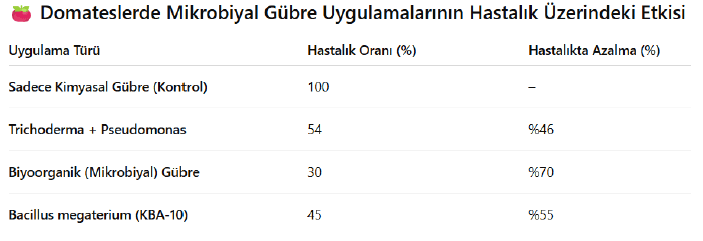
For example, in Himachal Pradesh (India), seed inoculation of tomato seedlings with beneficial microorganisms such as Trichoderma and Pseudomonas fluorescens was reported to reduce pre-emergence damping-off by 45.6% and post-emergence damping-off by 58%.[1]
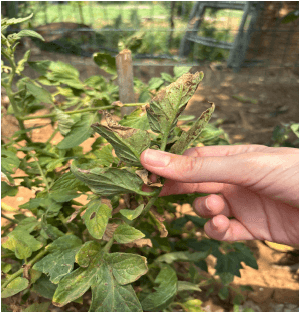
Another study shows that the incidence of bacterial wilt in tomatoes fell by 67–82% in fields treated with bio-organic fertilizer.[2]
There are examples from Türkiye as well: in studies carried out at Süleyman Demirel University, microorganism formulations (for example "B3+BA-A" and "B4+BA-B") were tested against tomato pith necrosis, and positive results were reported for plant growth and chlorophyll levels.[1]
In addition, a study reported in the Turkish Journal of Biological Control found that using the Bacillus megaterium KBA-10 strain significantly reduced overall disease severity in the plant.[3]
The microorganisms used in these studies (such as Trichoderma, Bacillus and Pseudomonas) and the trial conditions differ from one another. The results therefore cannot be generalized to every crop or every field. Still, the research shows that beneficial microorganisms can play an important role in root-zone health and in the plant's natural resilience.
In conclusion, a nutrition approach that takes the soil's biological balance into account can be part of a holistic strategy that supports plant health in tomato growing. For disease and pest management, however, expert advice and an appropriate crop protection program should always come first.
Cherry Mic's microbial fertilizers are produced with native bacterial strains isolated from Turkish soils. For example, micAP, with its Azotobacter chroococcum and Pseudomonas fluorescens, supports nitrogen and phosphorus uptake, root development and a healthy root zone. It can be applied through an existing drip system; it should not be mixed in the same tank with chemical fertilizers or pesticides and should be applied at a different time.
Today's productive fields depend on tomorrow's healthy soil.
Biotechnologist, Candan KILIÇ